Stay in touch, on purpose.
You don't lose touch with people deliberately. It happens in the gaps — a birthday you meant to catch, a friend you thought about in the car and then didn't call. Keep Up closes the gaps.
What it does
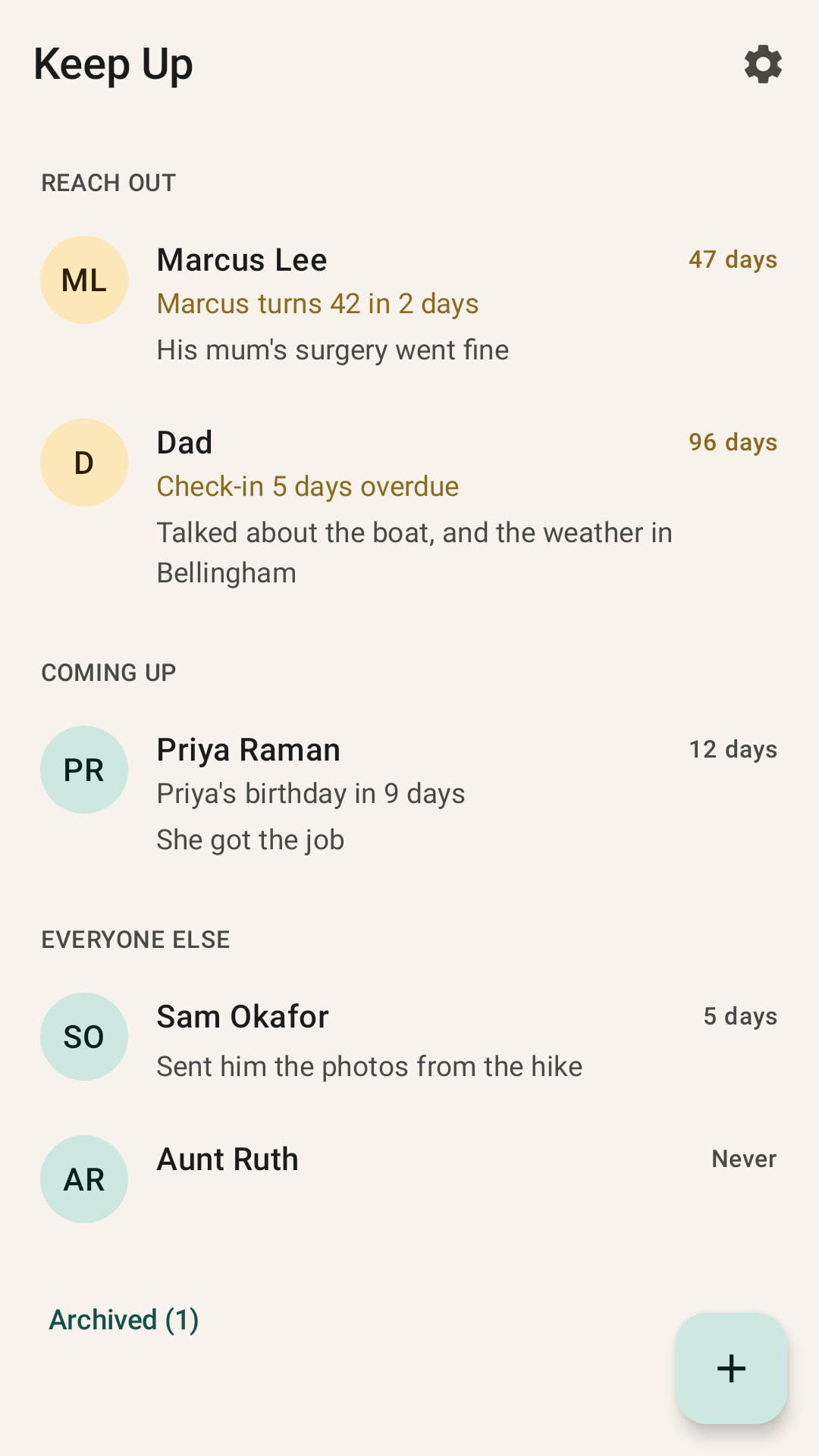
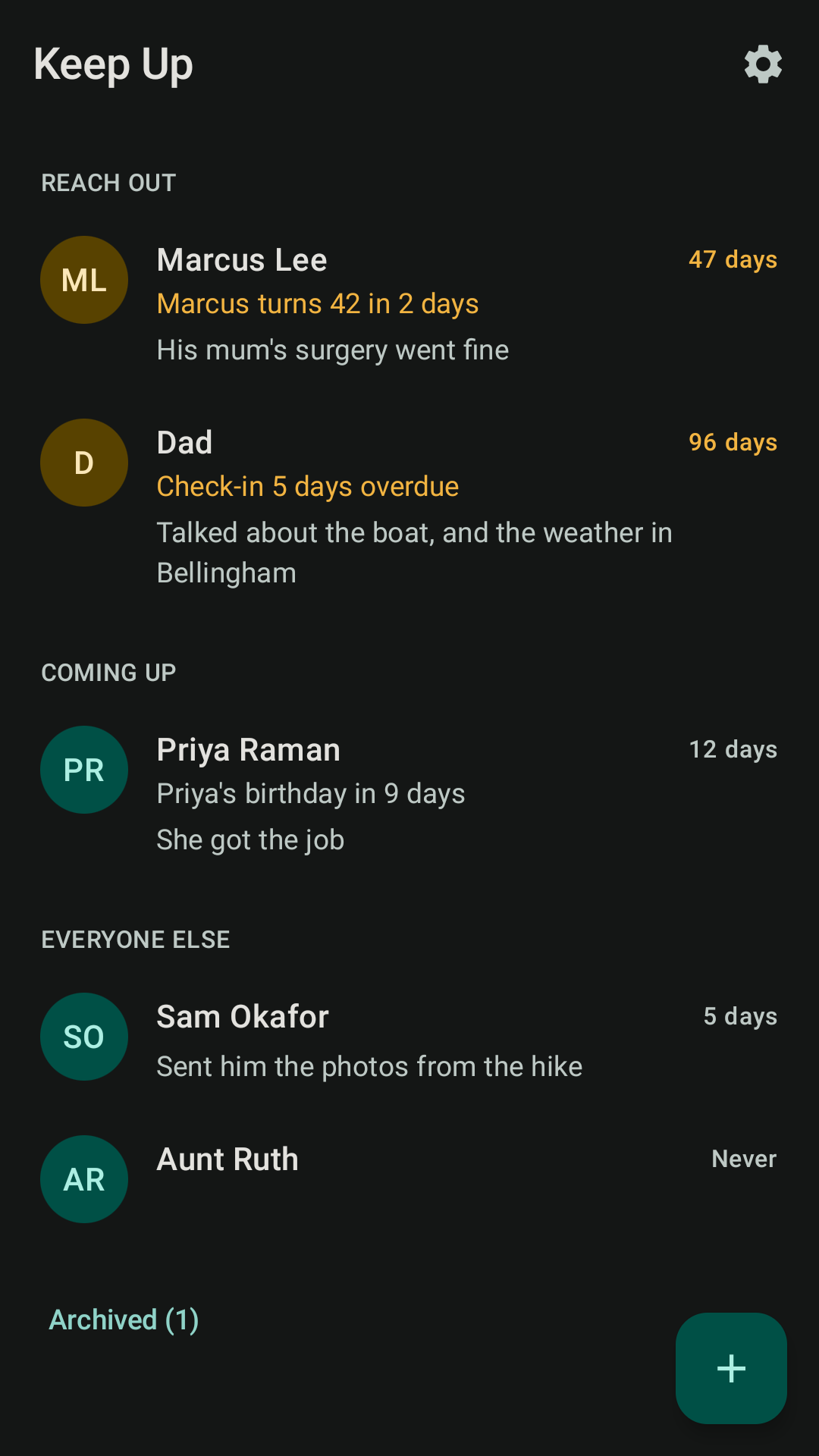
Add the people who matter. Say how often you want to be in touch with each of them — every two weeks for your brother, twice a year for the friend who moved away — and Keep Up watches the calendar and tells you who's due.
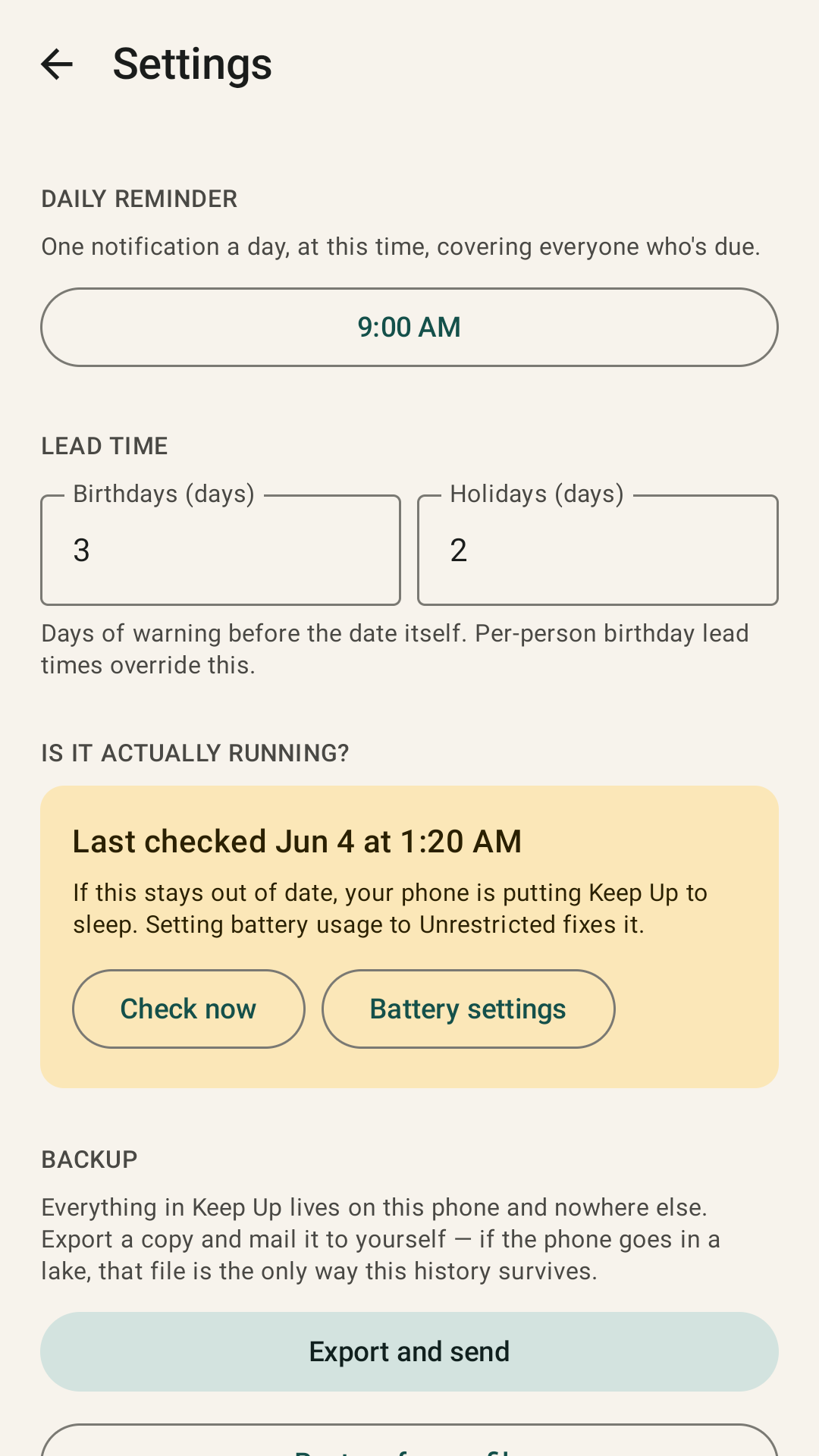
- One notification a day, at a time you choose, covering everyone at once. Not a stream of pings through the afternoon.
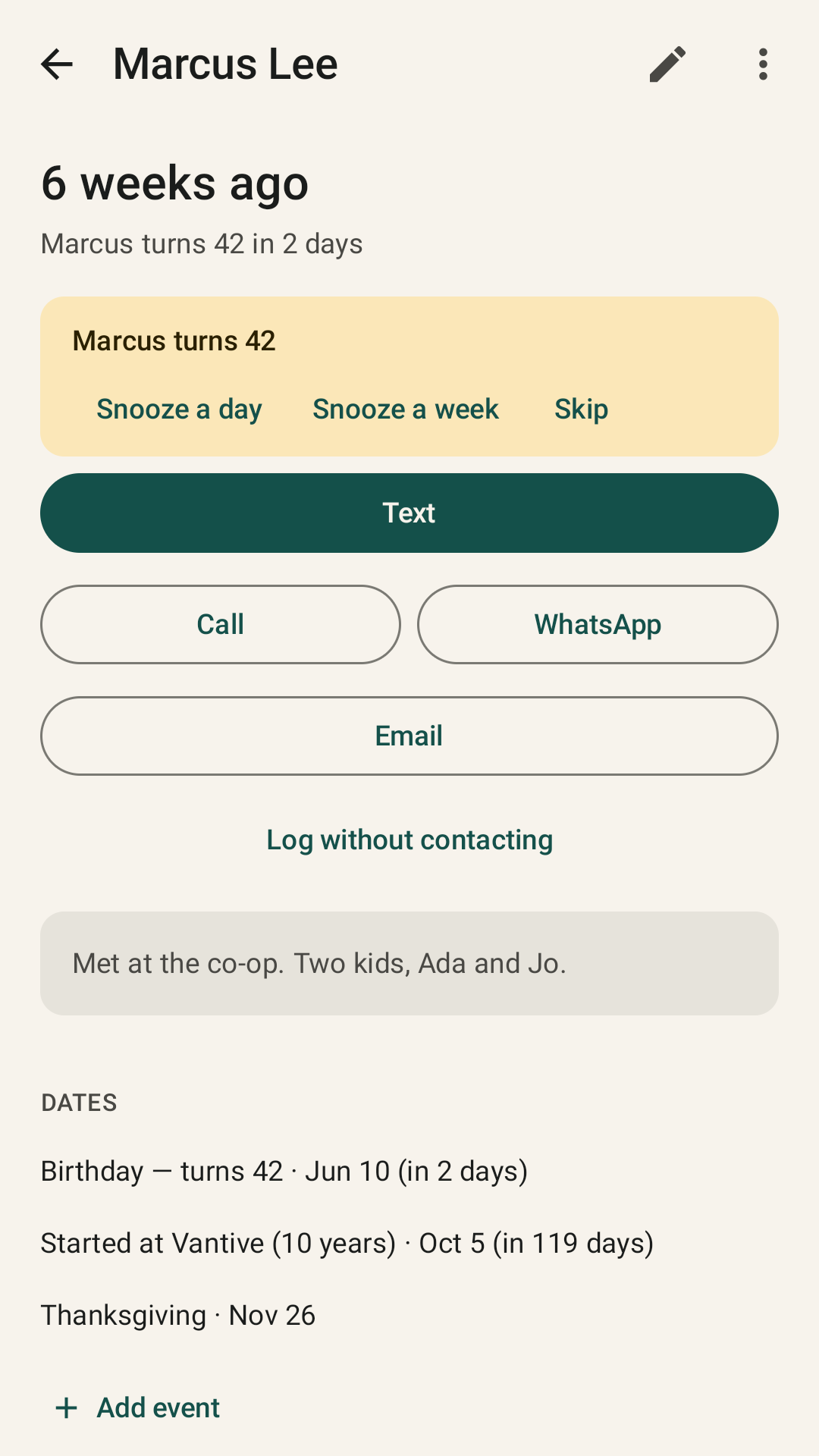
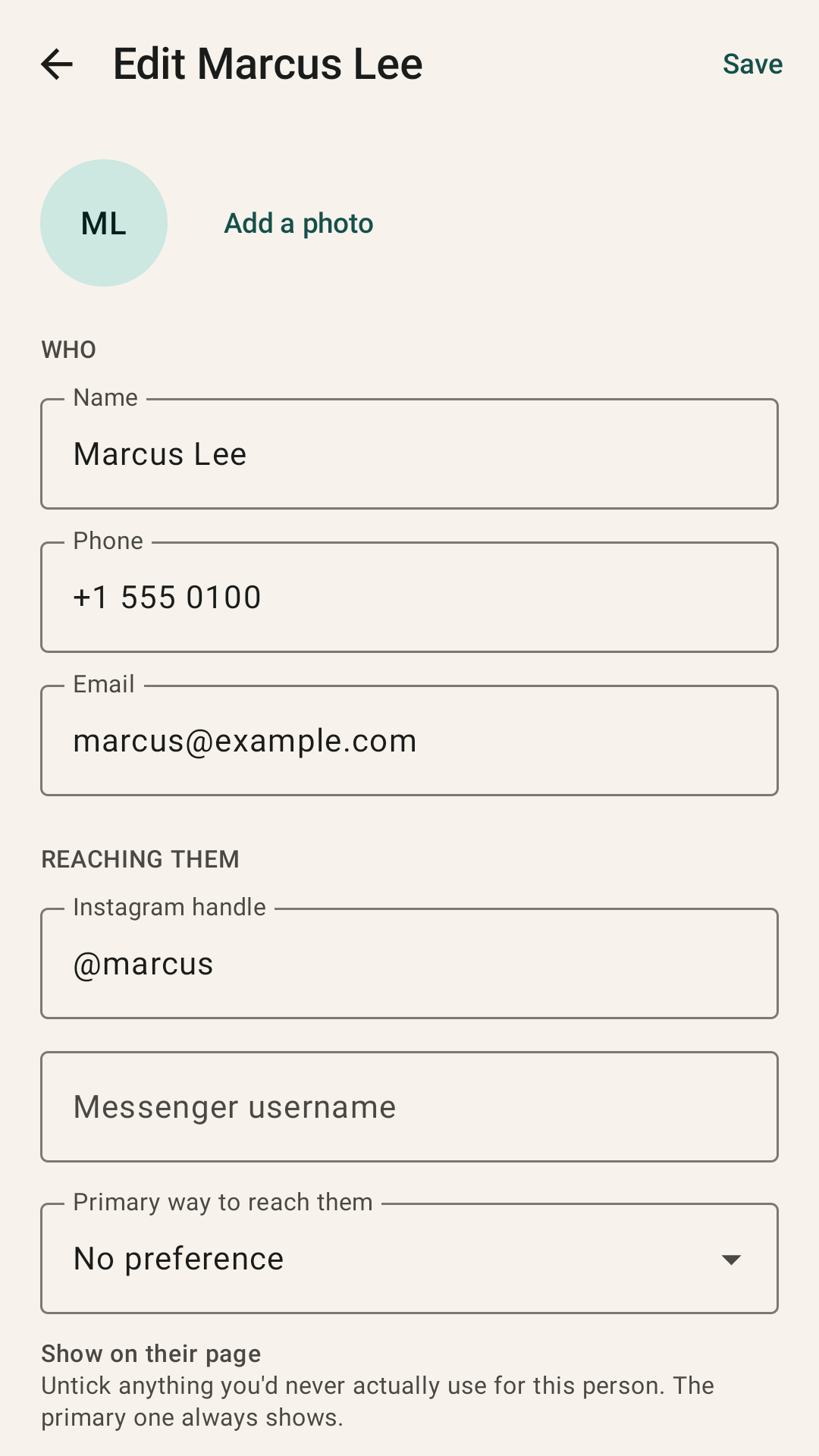
- Reach out from the app. Text, call, email, WhatsApp, Signal, Instagram or Messenger — pick the one you actually use for that person and hide the rest.
- Write down what you talked about. Next time you'll know that his mum's surgery went fine.
- Dates worth remembering. Birthdays and anniversaries, plus anything else you want warning of: an election, a graduation, a first day at a new job.
- Snooze or skip. Not up to it today is a valid answer.
- A home screen widget showing who is due next.
- Share a message into Keep Up from any app and it becomes the note.
Where your data lives
On your phone. Keep Up has no account, no sign-in and no server. It doesn't request Android's internet permission at all, so there is nowhere for any of it to go — not to me, not to anyone.
That cuts both ways, and the app says so in its own settings screen: everything lives on one phone, so if the phone goes in a lake, an exported backup file is the only way the history survives. Keep Up writes that file whenever you ask and lets you mail it to yourself.
The full privacy policy is about a page long, because there is very little to say.
A look at it
Getting it
Keep Up is in closed testing on Google Play while it collects the fourteen days of testers that Google requires of a personal developer account before it will open production. If you'd like to be one of them, mail me.